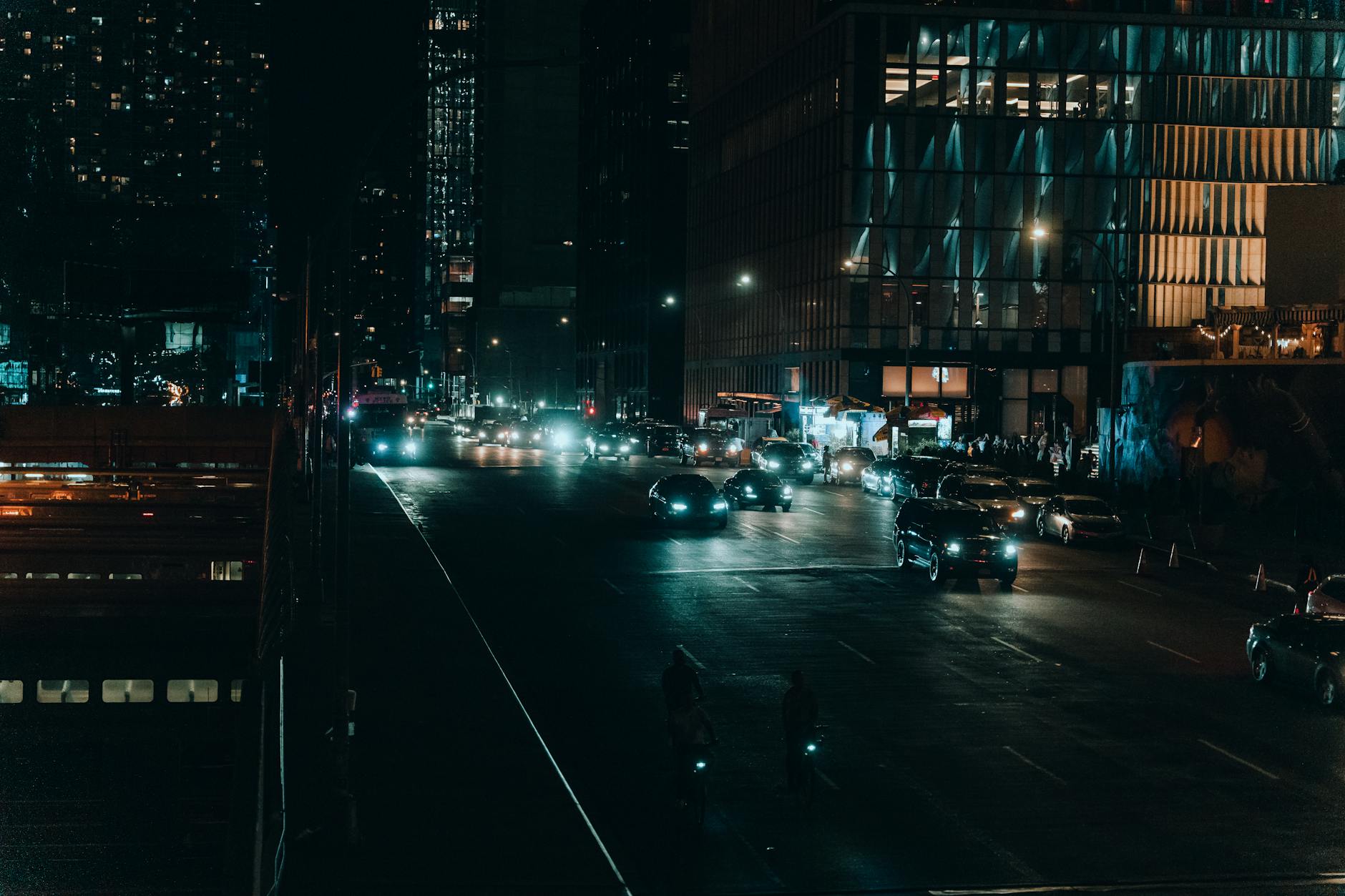
Quick Answer: A nighttime breakdown is more dangerous than a daytime one, other drivers can’t see you as well, and you’re more vulnerable on foot. Get off the road completely, turn on every light you have, stay in the car if you’re on a highway, and call for help immediately. Do not try to diagnose or fix the car in the dark on the side of a road.
What To Do
- Get fully off the road. Don’t stop halfway on the shoulder. Pull past the white line and onto the grass or gravel if possible. Every foot of clearance matters. If your car is still rolling, use the last of its momentum to coast as far from the travel lane as you can, even if that means a soft ditch. A scratched bumper is worth it.
- Turn on your hazard lights immediately. Do this before you even stop completely. At highway speeds, a driver 500 feet back has only about 5 seconds to react. Those flashing lights buy you time.
- Turn on your interior dome light. This makes you visible from the side and lets approaching drivers see there are people inside. It also helps you stay oriented inside the car without blinding yourself with a phone screen.
- If you have road flares or reflective triangles, set them 200-300 feet behind the car. On a highway with a 65 mph speed limit, 300 feet gives approaching drivers roughly 3 seconds of warning. Flares are more visible in rain. Triangles are safer if you’re near fuel.
- Stay inside the vehicle if you’re on a highway or a road with fast-moving traffic. The car is a steel cage, it’s safer than standing in the dark. Studies on highway fatalities consistently show that pedestrians struck on the shoulder are killed far more often than occupants inside a stopped vehicle.
- Call roadside assistance or 911. If you don’t have roadside coverage, call 911. They will contact a tow service and can send a patrol officer to monitor the scene.
- Tell someone your location. Text a friend or family member your exact position, nearest exit, mile marker, or cross street. If you’re unsure of the mile marker, look it up in your phone’s maps app before your battery drops further.
- Keep your phone charged. If your battery is low, stop using non-essential apps immediately. Turn off Bluetooth, reduce screen brightness, and close background apps. A phone charger in the car is not optional gear, it’s emergency equipment.
- If someone stops to help, stay in your locked car and crack the window to talk. You don’t have to get out. Ask them to call 911 if you haven’t already. Genuine good samaritans will not pressure you to unlock the door.
What To Have in Your Car at Night
- Battery-powered flashlight or headlamp (not just your phone’s light, phone batteries are too valuable)
- Reflective triangles or road flares (carry both if you can, flares for wet weather, triangles near gas)
- Phone car charger with a short cable that reaches the driver’s seat
- Roadside emergency kit with jumper cables, basic tools, and a reflective vest
- Warm layer or blanket (if weather is cold, temperatures drop fast when the engine is off)
- A printed list of emergency contacts and your roadside assistance number, in case your phone dies entirely
Stay Safe
- Do not stand behind or in front of your vehicle. If another car drifts off the road, the safest place is inside your car or completely away from it, not at the bumpers.
- If you feel unsafe, wrong neighborhood, someone is following, or your gut says something is off, call 911 and stay on the line. Dispatchers are trained to stay with you.
- Do not accept rides from strangers. Wait for verified roadside assistance or police. If you called a tow service, ask for the driver’s name and the company’s callback number before they arrive so you can confirm the right person showed up.
- If you must exit on a highway, exit from the passenger side away from traffic, and move as far off the road as possible before stopping. Never walk along the edge of a travel lane in the dark.
- Disabled veteran or free roadside programs: Many states offer free towing assistance. USAA, AAA, and most insurance providers have 24/7 roadside lines. Some manufacturers like Ford and GM include roadside coverage for the first few years of a new vehicle’s life, check your glove box documents.
Common Questions
Q: Is it safe to stay in my car on the highway at night if it breaks down? A: Yes, in most situations staying inside is safer than standing outside. Get as far onto the shoulder or grass as possible, keep your seatbelt on, and turn on every light you have. The main exception is if the car is smoking or smells like fuel, in which case get out and move well away from it.
Q: What if my hazard lights won’t work because the battery is dead? A: Set out your reflective triangles or light flares immediately, they don’t need the car’s power. A battery-powered flashlight or headlamp placed on the roof or trunk can also alert approaching drivers. This is exactly why carrying non-electrical emergency gear matters.
Q: How do I find my exact location to tell the tow company if I don’t recognize where I am? A: Open your phone’s map app and drop a pin on your current position, it will show coordinates or a nearby address. On a highway, look for the green mile marker signs posted on the right shoulder every tenth of a mile. Give the tow dispatcher your direction of travel, the nearest exit number, and the mile marker if you can find one.
A nighttime breakdown is not the time to troubleshoot a fuel pump or battery in the dark. Get safe, get visible, get help. That’s the whole job.
Need roadside help? Visit Tow With The Flow for real answers when your car breaks down.